Vitamin D3 Soft Gelatin Capsules

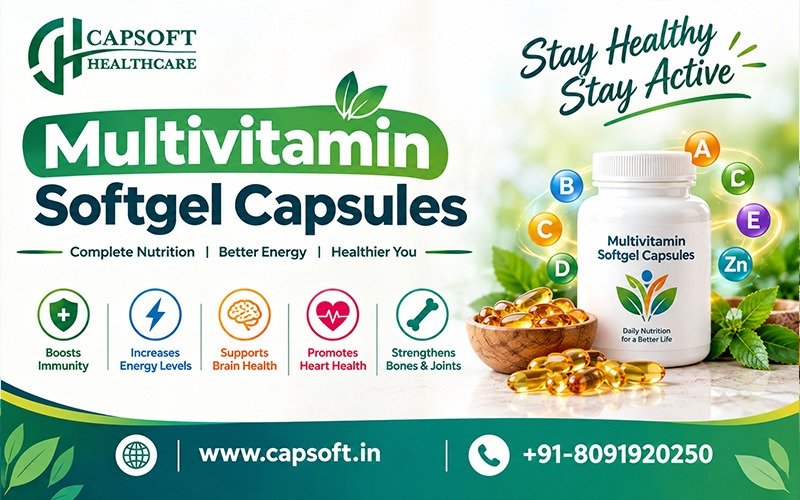
Multivitamin Softgel Capsules
October 5, 2026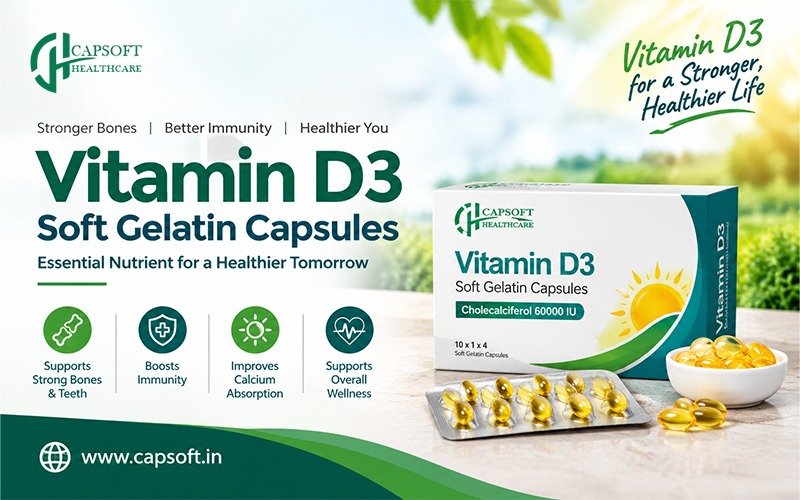
Vitamin D3 Soft Gelatin Capsules: Benefits, Uses, Manufacturing Process and Quality
Vitamin D3 soft gelatin capsules provide a convenient way to deliver cholecalciferol in a measured dosage form. For brands developing these products, choosing reliable vitamin d3 soft gelatin capsule manufacturers is essential for consistent quality and production.
Vitamin D3 is an important fat-soluble vitamin associated with normal calcium absorption, bone health, muscle function, and immune system function. Because it is fat-soluble, vitamin D3 is commonly formulated in an oil-based fill and enclosed within a soft gelatin shell.
India has developed a strong manufacturing ecosystem for pharmaceutical and nutraceutical products. Businesses searching for experienced softgel manufacturers in india can evaluate manufacturing infrastructure, quality systems, formulation capabilities, testing facilities, packaging options, documentation, and regulatory support before selecting a production partner.
Capsoft Healthcare for Vitamin D3 Soft Gelatin Capsules
Capsoft Healthcare is a softgel manufacturer based in Baddi, Himachal Pradesh, India. The company provides manufacturing solutions for pharmaceutical and nutraceutical products and supports businesses looking for softgel production and contract manufacturing services.
Vitamin D3 can be formulated into soft gelatin capsules according to the required product specifications, strength, formulation, capsule size, packaging format, and target market.
A successful softgel product requires more than simply filling an ingredient into a capsule. Raw material selection, formulation development, encapsulation, drying, inspection, testing, packaging, and documentation all contribute to the final product.
Capsoft Healthcare supports businesses through softgel manufacturing and related product-development requirements. Companies can discuss their product specifications and manufacturing requirements before beginning commercial production.
For businesses looking specifically for vitamin D3 manufacturing solutions, the Capsoft page on Vitamin D3 Softgel Manufacturers in India provides additional information about this product category.
What Are Vitamin D3 Soft Gelatin Capsules?
Vitamin D3 soft gelatin capsules are oral dosage forms containing vitamin D3, also known as cholecalciferol, within a soft gelatin shell.
Vitamin D3 contributes to several normal physiological functions. It contributes to the maintenance of normal bones and teeth, normal calcium absorption and utilization, normal muscle function, and normal immune system function.
The softgel shell surrounds the formulation and creates a sealed dosage unit. Since vitamin D3 is fat-soluble, it can be incorporated into a suitable oil-based formulation.
This makes softgel technology a practical option for developing vitamin D3 supplements.
Some common characteristics of vitamin D3 softgels include:
- Convenient single-dose format
- Easy-to-use capsule presentation
- Suitability for oil-based formulations
- Consistent fill volume
- Flexible capsule sizes
- Multiple packaging possibilities
- Suitable for different product strengths
- Consumer-friendly presentation
The exact formulation and dosage should be determined according to the product’s intended use and applicable regulatory requirements.
Why Is Vitamin D3 Commonly Formulated as a Softgel?
Vitamin D3 is a fat-soluble vitamin, making oil-based formulations a practical option for many supplement products.
Softgel technology allows the active ingredient to be incorporated into a liquid or semi-liquid fill material. This formulation is then enclosed within a gelatin shell using specialized encapsulation equipment.
Another advantage is the flexibility available during product development. Manufacturers can work with different capsule sizes, fill volumes, shell characteristics, colors, and packaging formats according to the product specification.
For brands, this provides an opportunity to create vitamin D3 supplements that meet specific market and consumer requirements.
The final formulation should be selected based on factors such as stability, ingredient compatibility, dosage requirements, manufacturing performance, packaging, and regulatory considerations.
Benefits and Functions of Vitamin D3
Vitamin D3 has several important roles in normal body functions. It is particularly associated with calcium and phosphorus metabolism.
Supports Normal Bone Health
Vitamin D contributes to the normal absorption and utilization of calcium and phosphorus. These minerals play important roles in maintaining normal bones and teeth.
Adequate vitamin D status is therefore relevant to normal skeletal health.
Contributes to Normal Muscle Function
Vitamin D contributes to normal muscle function. This is one reason vitamin D is considered an important nutrient beyond its association with bones.
Supports Normal Immune Function
Vitamin D contributes to the normal function of the immune system. However, vitamin D supplements should not be presented as treatments or cures for diseases unless such claims are permitted by applicable regulations.
Supports Calcium Metabolism
Vitamin D contributes to normal calcium absorption and utilization. Calcium is important for normal bone and tooth maintenance.
Convenient Supplementation
Softgel capsules provide a practical way of delivering a measured amount of vitamin D3 in a sealed dosage unit. Their compact format also makes them convenient for packaging and distribution.
How Vitamin D3 Soft Gelatin Capsules Are Manufactured
The manufacturing process involves several controlled stages. Each stage contributes to the quality, consistency, appearance, and performance of the finished product.
For a more detailed overview, readers can explore Capsoft’s Soft Gelatin Capsules Manufacturing Process page.
1. Raw Material Selection and Testing
Manufacturing begins with the selection of vitamin D3 and other formulation ingredients.
Raw materials should meet established specifications before they are used in production. Manufacturers may review supplier documentation, certificates of analysis, specifications, and other quality records.
Appropriate material controls help establish consistency from batch to batch.
2. Preparation of the Fill Material
Vitamin D3 is incorporated into a suitable fill formulation.
Because vitamin D3 is fat-soluble, an oil-based carrier may be used. The formulation needs to remain sufficiently uniform during processing to help achieve consistent dosage in the finished capsules.
Other permitted excipients may be incorporated depending on the formulation requirements.
3. Preparation of the Gelatin Shell
The gelatin shell is prepared separately.
A typical softgel shell may contain gelatin, purified water, plasticizers, and other suitable ingredients depending on the product specification.
The shell needs appropriate physical properties for forming, sealing, drying, handling, and storage.
4. Softgel Encapsulation
The prepared fill material is transferred to the encapsulation stage.
Gelatin ribbons are formed and brought together with the fill material. Specialized equipment forms the capsule, introduces the required fill quantity, and seals the gelatin shell.
Controlled operating conditions are important during this stage to maintain capsule quality and production consistency.
5. Drying
Newly manufactured softgels contain moisture and therefore require controlled drying.
Drying helps the capsules achieve their required physical properties. Environmental conditions such as temperature and humidity need to be appropriately controlled.
6. Inspection and Quality Testing
After drying, softgels are inspected for characteristics such as shape, appearance, sealing, leakage, and other physical defects.
Depending on the product and applicable requirements, laboratory testing may include:
- Identification
- Assay
- Uniformity
- Microbial testing
- Physical testing
- Stability-related assessments
- Other applicable quality tests
Only products meeting the established specifications should proceed to final packing and release.
7. Packaging
Finished capsules are packed in suitable containers, bottles, blister packs, or other packaging formats.
Packaging helps protect the product during storage and transportation. Product labels generally provide information such as ingredients, directions, batch details, manufacturing information, expiry information, and storage conditions as applicable.
Important Quality Factors for Vitamin D3 Softgels
Quality management is an important consideration when selecting vitamin D3 soft gelatin capsule manufacturers.
A reliable production system should cover the complete manufacturing cycle, beginning with incoming raw materials and continuing through finished-product release.
Important factors include:
- Raw material specifications
- Supplier qualification
- Material testing
- Accurate weighing
- Formulation uniformity
- Controlled encapsulation
- Gelatin-shell quality
- Moisture control
- Finished-product inspection
- Laboratory testing
- Batch documentation
- Stability considerations
- Appropriate packaging
- Product traceability
- Storage controls
Businesses should also verify that the manufacturing partner follows the quality and regulatory requirements applicable to the intended product and market.
How to Choose Vitamin D3 Soft Gelatin Capsule Manufacturers
Choosing a manufacturing partner should involve more than comparing the quoted production price.
A business should evaluate the manufacturer’s complete capabilities before entering into a manufacturing agreement.
Manufacturing Experience
Look for manufacturers with relevant experience in softgel manufacturing and nutraceutical or pharmaceutical formulations.
Experience can help during formulation development, production planning, troubleshooting, packaging, and quality management.
Manufacturing Infrastructure
The facility should have appropriate equipment and controlled areas for formulation, encapsulation, drying, inspection, and packaging.
Quality Systems
A suitable quality management system helps maintain product consistency. Businesses should ask about raw material controls, testing, batch documentation, and finished-product release.
Formulation Support
Formulation support can be valuable for businesses developing a new vitamin D3 product or modifying an existing formulation.
Packaging Capabilities
Packaging requirements vary between products and markets. Manufacturers should be able to discuss suitable packaging options according to the formulation and distribution requirements.
Documentation and Regulatory Support
Documentation is important for quality verification, product registration, distribution, and exports.
Businesses should understand what documentation the manufacturer provides and which regulatory responsibilities remain with the brand owner.
Why Choose Softgel Manufacturers in India?
India has an established pharmaceutical and nutraceutical manufacturing industry. Businesses can access different production models, including contract manufacturing, third-party manufacturing, private-label production, and formulation development.
When comparing softgel manufacturers in india, businesses should consider:
- Manufacturing experience
- Production infrastructure
- Quality systems
- Product-development capabilities
- Testing facilities
- Manufacturing capacity
- Packaging options
- Regulatory documentation
- Export capabilities
- Minimum order quantities
- Production timelines
- Customer support
Baddi, Himachal Pradesh, is one of India’s established pharmaceutical manufacturing locations. Businesses seeking regional manufacturing partners can also explore Capsoft’s page about Softgel Manufacturers in Baddi.
Private-Label and Third-Party Vitamin D3 Softgel Manufacturing
Private-label and third-party manufacturing can help businesses introduce vitamin D3 supplements without establishing their own manufacturing facility.
Under this model, the manufacturing company handles agreed production activities while the brand focuses on areas such as marketing, sales, distribution, and customer relationships.
A typical project may include:
- Product requirement discussion
- Formulation selection
- Strength confirmation
- Capsule-size selection
- Packaging selection
- Label and artwork development
- Manufacturing
- Quality testing
- Documentation
- Finished-product dispatch
The exact services differ between manufacturers, so responsibilities should be clearly defined before production begins.
Businesses interested in outsourced production can also learn more through Capsoft’s resource on Soft Gel Capsule Contract Manufacturing in India.
Factors That Affect Vitamin D3 Softgel Product Development
Several technical and commercial factors can influence a vitamin D3 softgel product.
Vitamin D3 Strength
The required strength should be selected according to the intended product specification and applicable regulations.
Manufacturers should produce the product according to an approved formulation rather than selecting a strength simply for marketing purposes.
Capsule Size
Capsule size depends on factors such as fill volume, formulation characteristics, and the desired product presentation.
Fill Formulation
The carrier oil and other excipients can influence formulation characteristics, manufacturing performance, and stability.
Packaging
Suitable packaging is important for maintaining product quality during its stated shelf life. Packaging should be selected according to the formulation, storage conditions, and target market.
Target Market
Products sold in different countries may have different requirements relating to ingredients, dosage, labeling, claims, documentation, and regulatory compliance.
Vitamin D3 Softgels Compared With Other Dosage Forms
Vitamin D3 can be manufactured in several dosage forms, including tablets, hard capsules, oral liquids, powders, and softgels.
Softgels can be particularly suitable when an oil-based formulation is preferred. They also provide a sealed and convenient dosage format.
However, there is no single dosage form that is ideal for every product. The final choice should consider the formulation, target consumer, dosage, stability, manufacturing requirements, packaging, and applicable regulations.
Key Points to Check Before Ordering Vitamin D3 Softgels
Before selecting a manufacturing partner, businesses should prepare a clear product specification.
- Define the required vitamin D3 strength.
- Confirm the desired capsule size.
- Select the preferred packaging format.
- Review raw material specifications.
- Discuss quality-testing requirements.
- Confirm manufacturing capacity.
- Review relevant quality certifications and systems.
- Discuss minimum order quantities.
- Confirm documentation requirements.
- Discuss expected manufacturing timelines.
- Review storage requirements.
- Confirm labeling responsibilities.
- Discuss regulatory requirements.
- Evaluate previous softgel manufacturing experience.
A detailed product brief can reduce misunderstandings and make communication between the brand and manufacturer more efficient.
Related Softgel Products and Manufacturing Resources
Vitamin D3 is often included in broader nutraceutical product portfolios. Businesses researching related formulations may also find the following Capsoft resources useful:
- Antioxidant Multivitamin and Multimineral Soft Gelatin Capsules for businesses exploring combination nutritional formulations.
- Multivitamin Softgel Capsules for information about combining selected vitamins and nutritional ingredients in softgel dosage forms.
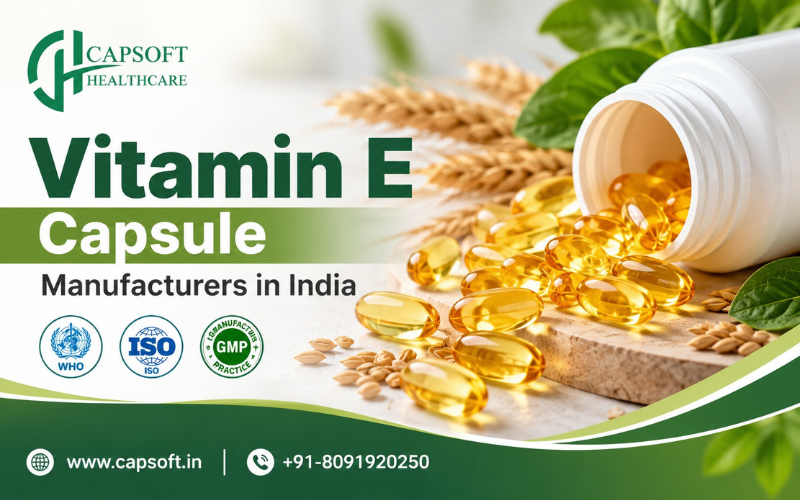
- Vitamin E Capsule Manufacturers in India for businesses researching another commonly manufactured vitamin capsule category.
- Calcium Soft Gel Capsules for information about calcium-focused softgel products.
- Omega 3 Fish Oil Softgels for businesses exploring oil-based nutraceutical softgels.
These related categories demonstrate the flexibility of softgel manufacturing for different nutritional product concepts.
Frequently Asked Questions About Vitamin D3 Soft Gelatin Capsules
What are vitamin D3 soft gelatin capsules?
Vitamin D3 soft gelatin capsules are oral dosage forms containing cholecalciferol within a soft gelatin shell. They are commonly produced using an oil-based fill formulation.
Why is vitamin D3 used in softgel capsules?
Vitamin D3 is fat-soluble, making it suitable for oil-based formulations. Softgel technology provides a convenient sealed dosage form for these formulations.
What is cholecalciferol?
Cholecalciferol is the scientific name for vitamin D3. It is one of the forms of vitamin D commonly used in nutritional supplements.
How are vitamin D3 softgels manufactured?
The process generally includes raw material verification, preparation of the fill formulation, gelatin-shell preparation, encapsulation, drying, inspection, laboratory testing, and packaging.
How should I select vitamin D3 soft gelatin capsule manufacturers?
Evaluate manufacturing experience, production infrastructure, quality systems, testing capabilities, formulation support, documentation, packaging capabilities, regulatory support, and production capacity.
Can vitamin D3 softgels be manufactured under a private label?
Yes. Private-label and third-party manufacturing can allow brands to produce vitamin D3 softgel products under their own brand, subject to applicable manufacturing and regulatory requirements.
What factors affect the quality of vitamin D3 softgels?
Raw material quality, formulation uniformity, encapsulation controls, drying conditions, testing, packaging, storage, and overall quality management can all influence the finished product.
Are vitamin D3 softgels suitable for everyone?
Individual nutritional needs vary. Consumers should follow the product’s directions and seek advice from a qualified healthcare professional when they have questions about supplementation, dosage, medical conditions, or possible interactions.
What should businesses check before purchasing vitamin D3 softgels?
Businesses should review the formulation, strength, ingredient specifications, manufacturing standards, testing requirements, packaging, documentation, minimum order quantity, production timeline, and applicable regulatory requirements.
Conclusion
Vitamin D3 soft gelatin capsules are a practical dosage form for products containing cholecalciferol. Their suitability for oil-based formulations, convenient presentation, and flexible manufacturing options have made them an established category within the nutraceutical industry. According to the NIH Office of Dietary Supplements, vitamin D is a fat-soluble vitamin, and vitamin D3 (cholecalciferol) is one of the forms used in dietary supplements. NIH Office of Dietary Supplements – Vitamin D Fact Sheet
For businesses developing these products, selecting experienced vitamin d3 soft gelatin capsule manufacturers is an important part of the product-development process. Manufacturing infrastructure, formulation expertise, quality systems, testing, packaging, documentation, and regulatory support should all be considered before choosing a manufacturing partner.
Capsoft Healthcare offers softgel manufacturing solutions from Baddi, Himachal Pradesh, for businesses looking for contract and third-party manufacturing support. With a clear product specification and an appropriate manufacturing partner, brands can approach vitamin D3 softgel development with a structured focus on quality, consistency, and production requirements.