Omega 3 Capsules Manufacturers India

Calcium Soft Gel Capsules
September 7, 2026
Third Party Softgel Manufacturers in Baddi
September 22, 2026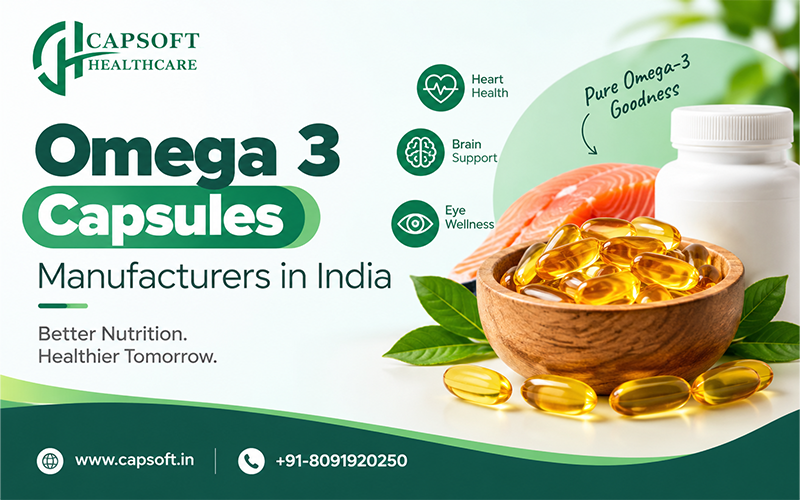
Fish oil and omega-3 supplements have moved from a niche health-food shelf item to a top-searched supplement category worldwide. That growth has turned omega 3 capsules manufacturers India into a key part of the global nutraceutical supply chain. This guide explains what omega-3 softgel capsules are and why demand keeps rising. It also covers current market data and how to evaluate the right manufacturing partner for your brand.
What Are Omega 3 Capsules?
Omega-3 capsules deliver essential fatty acids, mainly EPA (eicosapentaenoic acid) and DHA (docosahexaenoic acid). Manufacturers source these acids from fish oil, krill oil, algae oil, or flaxseed oil. They usually encapsulate the oils in a soft gelatin shell, since the fill material is liquid. This liquid form needs a sealed, oxidation-resistant format.
Common omega-3 sources used in capsule production include:
- Fish oil — sourced from sardines, anchovies, mackerel, and salmon; the most widely used source
- Krill oil — offers phospholipid-bound omega-3s with added astaxanthin
- Algae oil — a plant-based, vegan-friendly DHA and EPA source
- Flaxseed oil — provides ALA (alpha-linolenic acid), a plant-derived omega-3
- Cod liver oil — combines omega-3s with naturally occurring Vitamin A and D
Most consumers prefer softgel capsules over liquid oil formats. Capsules mask the fishy aftertaste and protect the oil from oxidation until the moment it’s swallowed. This is one reason softgel manufacturers in India have invested so heavily in encapsulation technology built specifically for oil-based fills.
Why Omega 3 Softgel Capsules Are in High Demand
Omega-3 supplementation has grown steadily as more consumers connect fatty acid intake with heart, brain, and joint health. Several factors drive this demand.
Rising Awareness of Heart and Brain Health
Consumers increasingly search for supplements tied to cardiovascular support and cognitive function. Omega-3s sit at the center of that conversation.
Preventive Healthcare Trends
More people take daily supplements as a preventive habit rather than a reactive one. This shift has expanded the everyday-use omega-3 category well beyond older demographics.
Better Bioavailability in Softgel Form
Soft gel capsules protect the oil from oxidation and release it quickly once swallowed. Many consumers and brands consider this superior to liquid oils or hard capsules.
Wider Product Innovation
Manufacturers now combine omega-3s with Vitamin D3, CoQ10, or probiotics in a single softgel. This gives brands more ways to differentiate their formulations.
Growth of E-Commerce and D2C Wellness Brands
Online supplement sales continue to expand rapidly. Omega-3 softgels remain one of the best-selling categories across D2C wellness platforms and online pharmacies. Many emerging D2C brands now work directly with softgel manufacturers in India to launch private-label omega-3 lines. This lets them skip the cost of building their own production facilities.
Current Market Statistics for Omega 3 and Softgel Capsules
The numbers behind this category confirm strong, sustained growth. Both the omega-3 and broader softgel capsule industries show this trend. Here are the most relevant current figures:
- India’s omega-3 supplements market is projected to reach roughly USD 879 million by 2030. That reflects a compound annual growth rate of about 10.9% from 2024 to 2030.
- A separate estimate places India’s omega-3 market at around USD 0.31 billion by 2025–2035, growing at a CAGR near 8.2%. Rising awareness of heart and brain health benefits drives most of this growth.
- Within global omega-3 supplement formats, the softgel segment holds a strong share. Better taste masking, improved absorption, and longer shelf-life protection against oxidation all favor softgels over liquid oils.
- India’s overall softgel capsule market was estimated at roughly USD 372 million in 2025. It’s projected to reach approximately USD 754 million by 2035, growing at a CAGR close to 7.3%.
- Online sales channels are expected to account for close to 30% of total softgel capsule sales in India by 2026. This reflects the rapid shift toward e-commerce-driven supplement buying.
- Asia Pacific, including India, China, Japan, and South Korea, remains the fastest-growing regional market for softgel capsules globally. Rising incomes, expanding domestic manufacturing, and growing preventive healthcare awareness all support this growth.
- The nutraceutical segment represents the largest share of India’s softgel capsule market. This reflects strong consumer demand for supplements like omega-3, multivitamins, and calcium softgels.
These figures make clear that omega 3 capsules manufacturers India operate inside one of the fastest-growing corners of the global nutraceutical industry. This is not a plateauing market.
Types of Omega 3 Capsules Produced in India
Indian softgel manufacturers produce a wide variety of omega-3 formulations to serve different markets and consumer needs.
- Standard fish oil softgels — general EPA/DHA supplementation for everyday wellness
- High-concentrate omega-3 softgels — formulated for higher EPA/DHA potency per capsule
- Omega-3 with Vitamin D3 combination softgels — popular for immunity and bone health positioning
- Algae-based vegan omega-3 softgels — a plant-based alternative for vegetarian and vegan consumers
- Krill oil softgels — a premium format combining omega-3s with astaxanthin and phospholipids
- Children’s omega-3 formulations — smaller capsule sizes or chewable softgel formats for pediatric use
- Prenatal omega-3 softgels — DHA-focused formulations marketed for maternal and fetal brain development support
How Omega 3 Capsules Manufacturers India Produce Softgels
Producing a stable, effective omega-3 softgel takes more precision than many other supplement categories. Fish oil is highly prone to oxidation, so every step matters. Here’s how the process typically works.
Raw Material Sourcing and Testing
Manufacturers source fish, krill, or algae oil from certified suppliers. They test each batch for heavy metals, oxidation levels, and purity before it enters production.
Formulation and Stabilization
Formulators often add natural antioxidants like Vitamin E (tocopherols) to slow oxidation and extend shelf life. They also determine the exact EPA/DHA ratio needed for the target formulation.
Gelatin or Plant-Based Shell Preparation
Technicians prepare the encapsulation shell using gelatin, plasticizers, and colorants. For vegetarian and algae-oil-based formulations, they substitute plant-based alternatives like carrageenan.
Rotary Die Encapsulation
Machines cast the shell material into ribbons and inject the oil fill between them. Rotary dies then seal each capsule. This step requires tight temperature control, since heat exposure accelerates oil oxidation.
Drying, Coating, and Quality Testing
Capsules go through controlled drying. Many manufacturers then apply an enteric coating to reduce fishy aftertaste and burping. This is a common consumer complaint with fish oil softgels. Quality teams run oxidation testing, microbial testing, and dissolution testing before release.
Certification and Export Compliance
Leading softgel manufacturers in India hold WHO-GMP, ISO 22000, and, where relevant, US FDA or EU-GMP certification. These credentials let them export omega-3 softgels to regulated markets worldwide. According to the National Institutes of Health Office of Dietary Supplements, quality control matters a lot in this category. Oxidation and purity control remain key factors in omega-3 supplement safety.
Why Brands Choose Omega 3 Capsules Manufacturers India
Global supplement brands increasingly source omega-3 softgels from India, and a few clear advantages explain the trend.
- Competitive manufacturing costs compared to Western production hubs
- Strong regulatory infrastructure with WHO-GMP and export-ready certifications
- Advanced encapsulation technology suited to oxidation-sensitive oils
- Flexible MOQs that work for both established pharma brands and smaller D2C startups
- In-house formulation support for combination products like omega-3 with Vitamin D3 or CoQ10
- Access to both marine-based and plant-based (algae) omega-3 sourcing options
- Established export infrastructure reaching more than 150 countries
This mix of cost efficiency, technical capability, and regulatory maturity explains the shift. Many global brands now list India among their top sourcing destinations for omega-3 softgel production. If you’re evaluating manufacturing partners more broadly, our complete guide to pharmaceutical softgel manufacturers in India can help. It covers certifications, MOQs, and vendor evaluation criteria in more depth.
What to Check Before Choosing an Omega 3 Capsules Manufacturer in India
Sourcing omega-3 softgels requires closer scrutiny than many other supplement categories. Oxidation risk and sourcing transparency are the main reasons. Keep these points in mind.
Oil Source and Sustainability Certification
Ask whether the fish oil comes from sustainable fisheries. Also confirm whether the manufacturer holds relevant sustainability or purity certifications.
Heavy Metal and Contaminant Testing
Confirm the manufacturer tests every batch for mercury, lead, and PCBs. These are common contaminants in marine-derived oils.
Oxidation Control (TOTOX Value)
Ask for TOTOX (total oxidation) values on finished batches. This number reflects how fresh and stable the oil is at the time of encapsulation.
Enteric Coating Options
If your target consumers are sensitive to fishy aftertaste or reflux, confirm whether the manufacturer offers enteric-coated softgel options.
Vegan and Algae-Based Capabilities
If you’re targeting a plant-based audience, confirm the manufacturer can produce algae-oil formulations. These should use a plant-based shell rather than traditional fish oil and gelatin.
Stability and Shelf-Life Data
Request accelerated stability testing data before you commit. This confirms the omega-3 softgels will hold potency and freshness through their full labeled shelf life.
Frequently Asked Questions
1. Why are so many global brands sourcing omega-3 capsules from manufacturers in India?
Omega 3 capsules manufacturers India offer a strong mix: cost-competitive production, WHO-GMP and export-ready certifications, and advanced encapsulation technology for oxidation-sensitive oils. They also offer flexible order quantities. Few other manufacturing hubs match this combination at the same price point.
2. What is the difference between fish oil and algae oil omega-3 capsules?
Fish oil is the traditional marine source of EPA and DHA. Algae oil offers a plant-based, vegan-friendly alternative that delivers similar omega-3 benefits without any animal-derived ingredients.
3. How can I tell if an omega-3 softgel manufacturer controls oxidation properly?
Ask for TOTOX (total oxidation) values and third-party testing reports. A reliable manufacturer will readily share this data, since oxidation directly affects both safety and potency.
4. Can omega 3 capsules manufacturers in India produce private label products?
Yes. Most established manufacturers offer private label and contract manufacturing services. Brands can customize EPA/DHA concentration, added actives, capsule size, coating, and packaging.
5. Do omega-3 softgels need refrigeration?
Most commercial omega-3 softgels don’t require refrigeration if manufactured with proper antioxidant stabilization. Still, storing them in a cool, dry place away from direct sunlight helps preserve freshness longer.
6. What certifications should I look for in an omega-3 softgel manufacturer?
At minimum, check for WHO-GMP and ISO 22000 certification. If you plan to export to regulated markets, also confirm US FDA, EU-GMP, or other relevant regional approvals.
7. Why do some omega-3 softgels cause fishy burps, and can manufacturers prevent this?
Fishy aftertaste typically comes from oil oxidation or a capsule that dissolves too early in the stomach. Many manufacturers now offer enteric-coated softgels, which delay dissolution until the capsule reaches the intestine. This significantly reduces the issue.
Final Thoughts
The growth of omega 3 capsules manufacturers India reflects a much larger shift in global consumer health habits. Preventive wellness and evidence-backed supplementation now shape everyday purchasing decisions. Market data across the omega-3 category and the broader softgel capsules industry tells the same story. Both point to strong, sustained growth well into the next decade. Rising health awareness, e-commerce expansion, and continued formulation innovation all drive this trend. For brands evaluating where to manufacture their omega-3 product line, partnering with experienced softgel manufacturers in India offers a practical path forward. It combines technical expertise, oxidation-sensitive production capability, regulatory compliance, and competitive costs, all under one roof.
I linked “global consumer health habits” to the WHO’s healthy diet fact sheet — a high-authority, topically relevant source about global health trends that fits naturally into that phrase without disrupting the sentence.