Gelatin Capsules Manufacturers in India

Softgel Manufacturers in Baddi
June 12, 2026
Softgel Capsule Manufacturing Process
September 1, 2026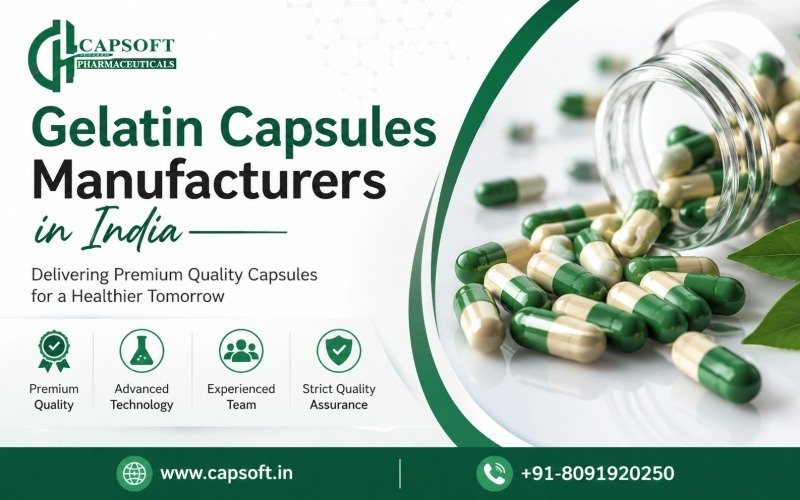
India has quietly become one of the largest hubs for capsule manufacturing in the world. From small nutraceutical startups to multinational pharmaceutical companies, businesses across the globe are turning to Indian manufacturers for high-quality, cost-effective capsule solutions. If you are searching for reliable gelatin capsules manufacturers in India, this guide will walk you through everything you need to know before placing your first order.
Why India Has Become a Global Hub for Capsule Manufacturing
India’s rise as a preferred sourcing destination is not accidental. It is the result of decades of investment in pharmaceutical infrastructure, a skilled workforce, and government support for the healthcare and nutraceutical sectors.
Some of the key reasons global buyers prefer Indian manufacturers include:
- Lower production costs compared to Europe and North America, without compromising on quality
- A large pool of chemists, pharmacists, and quality control experts
- Strong raw material availability, including bovine and fish-based gelatin
- Established export infrastructure and experience with international shipping
- Compliance with global standards such as GMP, ISO, and WHO-GMP certifications
These factors combine to make India an attractive destination not just for gelatin capsules, but also for buyers looking for trusted softgel manufacturers who can handle both domestic and export orders at scale.
Understanding Gelatin Capsules and Their Uses
Gelatin capsules are protective shells made primarily from animal-derived gelatin, water, and sometimes coloring or opacifying agents. They are used to encapsulate powders, granules, or pellets of active pharmaceutical ingredients, vitamins, minerals, and herbal extracts.
There are two broad categories of gelatin capsules:
- Hard gelatin capsules – Used for powders, granules, and pellet formulations. These are the most common type used in generic medicines, supplements, and multivitamins.
- Soft gelatin capsules (softgels) – Used for liquid or oil-based formulations such as fish oil, vitamin E, and herbal oils. Softgels require specialized manufacturing equipment and expertise, which is why buyers often specifically look for experienced softgel manufacturers rather than general capsule producers.
Both types play a critical role in the pharmaceutical, nutraceutical, and cosmeceutical industries because they mask unpleasant tastes, protect sensitive ingredients from oxidation, and improve dosage accuracy.
What to Look for When Choosing Gelatin Capsules Manufacturers in India
Not every manufacturer offers the same level of quality, consistency, or service. Before finalizing a supplier, it is worth evaluating a few critical factors.
Manufacturing Certifications and Compliance
Always verify that the manufacturer holds relevant certifications such as GMP (Good Manufacturing Practices), ISO 9001, HACCP, and, where applicable, WHO-GMP or US FDA registration. These certifications indicate that the facility follows strict hygiene, quality control, and documentation standards.
Raw Material Sourcing
Ask where the manufacturer sources its gelatin from. Reputable manufacturers maintain transparent supply chains and can provide documentation on the origin of bovine or fish gelatin used in production. This is particularly important for buyers with halal, kosher, or vegetarian requirements, as some manufacturers also offer plant-based alternatives such as HPMC capsules alongside traditional gelatin options.
Production Capacity and Turnaround Time
If you are placing bulk orders, confirm the manufacturer’s monthly production capacity and typical lead times. A manufacturer with modern, automated capsule-filling and printing machines will generally offer faster turnaround without sacrificing consistency in capsule size, color, and shell thickness.
Customization Options
Leading manufacturers allow customization of capsule size, color, printing (branding), and shell composition. This is especially useful for nutraceutical brands that want their packaging and capsules to reflect their brand identity.
Quality Testing Infrastructure
A trustworthy manufacturer should have an in-house quality control lab capable of testing disintegration time, moisture content, microbial limits, and dimensional accuracy of every batch produced.
Export Experience
If you are an international buyer, look for manufacturers with a proven track record of exporting to your region. Experience with export documentation, international packaging standards, and customs compliance can save significant time and reduce shipment delays.
The Growing Demand for Softgel Manufacturers in India
While hard gelatin capsules dominate the generic medicine and basic supplement segment, the softgel category has seen explosive growth in recent years. Rising global demand for omega-3 supplements, vitamin D3 softgels, CoQ10 capsules, and herbal oil formulations has pushed many Indian manufacturers to invest heavily in softgel encapsulation technology.
Working with specialized softgel manufacturers offers several advantages:
- Better bioavailability for oil-soluble nutrients compared to tablets
- Improved taste-masking for fish oil and other strong-smelling ingredients
- Flexible fill volumes and shapes (oval, round, oblong, and novelty shapes)
- Options for enteric coating to protect sensitive formulations from stomach acid
Because softgel manufacturing requires specialized rotary die machines, precise temperature and humidity control, and expertise in gelatin mass formulation, it is important to choose a manufacturer that has dedicated softgel production lines rather than a general capsule facility attempting to diversify.
Industries That Rely on Indian Capsule Manufacturers
Gelatin capsule manufacturing in India serves a wide range of industries, each with distinct requirements:
- Pharmaceutical companies requiring empty capsules for generic drug formulations
- Nutraceutical and dietary supplement brands producing multivitamins, protein blends, and herbal extracts
- Ayurvedic and herbal product manufacturers encapsulating traditional formulations for modern consumers
- Veterinary product companies developing capsules for animal health supplements
- Cosmeceutical brands encapsulating beauty-from-within formulations such as collagen and biotin
This diversity of demand has encouraged Indian manufacturers to build flexible production lines capable of handling small-batch custom orders as well as large-scale contract manufacturing.
Capsoft: A Name Worth Knowing in the Capsule Manufacturing Space
Among the companies operating in this space, Capsoft has built a presence in the empty capsule and softgel manufacturing segment, catering to pharmaceutical and nutraceutical businesses looking for consistent quality and reliable supply. Buyers evaluating gelatin capsules manufacturers in India often include companies like Capsoft in their comparison list when assessing production capabilities, certifications, and customization options. As with any supplier decision, it is advisable to request samples, verify certifications directly, and review production facilities before committing to a long-term partnership.
Step-by-Step Process of Sourcing Capsules from an Indian Manufacturer
For buyers new to sourcing from India, the process typically follows these steps:
- Initial inquiry – Share your requirements, including capsule type, size, color, quantity, and any customization needs.
- Sample request – Request physical samples to evaluate shell quality, disintegration time, and overall finish.
- Certification review – Ask for GMP, ISO, and other relevant certificates, along with third-party lab test reports if available.
- Pricing and MOQ discussion – Confirm minimum order quantities, pricing tiers, and payment terms.
- Trial order – Place a smaller trial order before committing to bulk purchasing.
- Quality inspection – Consider third-party inspection services, especially for first-time international orders.
- Bulk order and logistics – Finalize packaging, shipping method, and delivery timelines for the full order.
Following this structured approach reduces the risk of quality issues and helps establish a long-term, trustworthy supplier relationship.
Common Challenges Buyers Face and How to Avoid Them
Sourcing capsules internationally is not without its challenges. Some common issues buyers report include inconsistent batch quality, delayed shipments, and unclear communication regarding specifications. These challenges can largely be avoided by:
- Working only with manufacturers that provide clear documentation and certifications
- Requesting batch-wise quality reports for ongoing orders
- Maintaining clear written communication regarding specifications and tolerances
- Building relationships with manufacturers who have dedicated export teams
Frequently Asked Questions
- What is the difference between gelatin capsules and softgel capsules? Gelatin capsules (hard capsules) are two-piece shells used primarily for powders and granules, while softgels are one-piece, sealed capsules designed to hold liquid or oil-based formulations. Softgel production requires specialized rotary die equipment, whereas hard capsules are typically filled after manufacturing.
- Are Indian gelatin capsules manufacturers GMP certified? Most established manufacturers hold GMP certification, and many also carry ISO 9001, HACCP, and WHO-GMP certifications. It is important to verify certification status directly with the manufacturer before placing an order.
- Can I get vegetarian or halal-certified capsules from Indian manufacturers? Yes, many manufacturers offer HPMC (vegetarian) capsules alongside traditional gelatin capsules, and several also provide halal and kosher-certified gelatin options to meet diverse market requirements.
- What is the typical minimum order quantity (MOQ) for capsule manufacturing in India? MOQs vary by manufacturer and capsule type, ranging from a few hundred thousand capsules for standard orders to smaller quantities for custom or trial batches. It is best to confirm MOQ directly with the manufacturer based on your specific requirements.
- How long does it take to receive an order from a gelatin capsule manufacturer in India? Production and shipping timelines depend on order size, customization requirements, and destination country, but standard orders typically take a few weeks from confirmation to dispatch, with additional time for international shipping.
- Why should I choose a specialized softgel manufacturer instead of a general capsule producer? Softgel encapsulation requires specific machinery, gelatin mass formulation expertise, and quality control processes that differ significantly from hard capsule production. A manufacturer with dedicated softgel lines is more likely to deliver consistent shell integrity, accurate fill volumes, and proper sealing.
Final Thoughts
India’s capsule manufacturing industry has matured into a globally competitive sector, offering pharmaceutical and nutraceutical companies access to quality-certified, cost-effective production capabilities. Whether you need standard hard gelatin capsules or are searching for experienced softgel manufacturers capable of handling complex liquid formulations, taking the time to evaluate certifications, production capacity, and export experience will help you find a manufacturing partner suited to your business needs. As demand for supplements and pharmaceutical products continues to grow worldwide, Indian manufacturers are well positioned to remain a trusted sourcing destination for years to come. For a better understanding of international pharmaceutical manufacturing quality standards and Good Manufacturing Practices (GMP), refer to the World Health Organization (WHO) Good Manufacturing Practices (GMP) guidelines